Overview
Serengeti National Park, one of Africa’s most iconic parks, takes its name from the Maasai word “Serenget,” which means “Endless Plains.” True to its name, the Serengeti encompasses an impressive 14,750 square kilometers (5,700 square miles) of grasslands. This vast landscape, reminiscent of scenes from “The Lion King” and “Out of Africa,” captivates countless visitors every year, leaving them with unforgettable memories of Tanzania’s natural beauty.
History and Landscape
Established in the 1920s and designated a national park in 1951, Serengeti National Park features a diverse landscape that includes grassland plains, savannah, riverine forests, and woodlands. Recognized as a UNESCO World Heritage Site, the park is celebrated for its ecological significance and rich biodiversity.
Wildlife
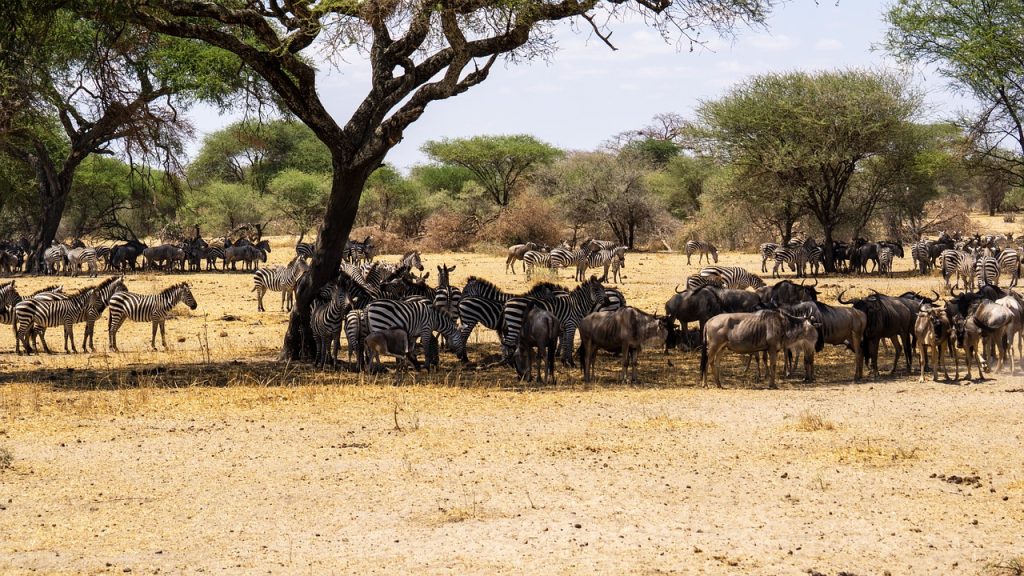
Serengeti National Park is home to an extraordinary array of wildlife, particularly predators. It likely has the largest lion population in Africa, with an estimated 3,000 lions. Other notable predators include spotted hyenas, leopards, wild dogs, and cheetahs. The park’s mammal diversity is equally remarkable, hosting elephants, the rare black rhinos, and wildebeest, among others. This diversity is especially evident during the annual migration when over a million wildebeest and hundreds of thousands of zebras traverse the plains in search of fresh grazing land and water. In addition to mammals, the park boasts over 500 bird species.
Geography
The park’s elevations range from 920 to 1,850 meters (3,020 to 6,070 feet) and extend 160 kilometers (100 miles) southeast from near Lake Victoria and 160 kilometers (100 miles) south from the Kenya-Tanzania border.
The Great Migration
The Serengeti is perhaps most famous for the Great Migration, an annual event involving over 1.5 million white-bearded wildebeest, around 250,000 zebras, and tens of thousands of elands, topis, and hartebeests. This migration, the second-largest terrestrial mammalian migration in the world, is recognized as one of Africa’s Seven Natural Wonders and one of the world’s ten natural travel wonders.
The migration begins in the southern Serengeti within the Ngorongoro Conservation Area. Following a clockwise route, the animals move northward towards Kenya’s Masai Mara Reserve, covering about 500 miles in their quest for food. This incredible journey occurs in two phases: the first from January to March, when the rains provide ample conditions for calving, and the second from late May, when the herds move northwest towards the Grumeti River. By July, the animals are crossing the Mara and Grumeti rivers, a perilous time as crocodiles await. By late August, the animals settle in Kenya for the rest of the dry season.
Conclusion
Whether you’re drawn by the breathtaking landscapes, the abundance of wildlife, or the awe-inspiring Great Migration, Serengeti National Park offers a quintessential African safari experience that is unparalleled. A visit to this magnificent park promises an adventure filled with wonder and natural splendor.
