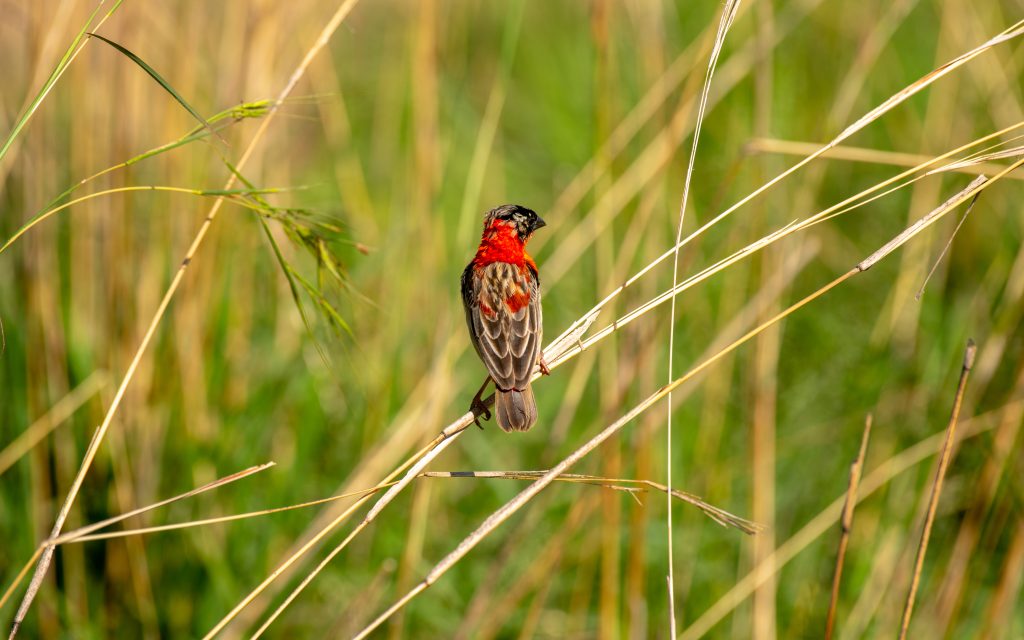
Uganda’s has diverse ecosystems, teeming with a profusion of flora and fauna, support an extraordinary variety of bird species. The country boasts approximately 1,091 bird species, making it one of Africa’s premier birding destinations, with over 50% of Africa’s bird richness and 11% of the world’s bird population. Among these, 15 species are endangered, 11 are vulnerable, and several are globally or regionally threatened, such as the Shoebill (Balaeniceps rex) and Grey-crowned Crane (Balearica regulorum).
Key Bird Areas in Uganda
Uganda hosts several significant bird areas, identified by Birding International as Important Bird Areas (IBAs). The country encompasses three Endemic Bird Areas (EBAs): the Albertine Rift mountains, the Eastern Democratic Republic of Congo lowlands, and the Kenyan mountains. Uganda also features over 30 restricted range species, 24 of which are found exclusively within the Albertine Rift.
The 30 IBAs in Uganda cover 7% of the country and are distributed across five regions: West, Southwest, East, Northwest, and South-Central (Lake Victoria Basin). Notable IBAs include Queen Elizabeth National Park (West), Bwindi Impenetrable National Park (Southwest), Mabamba Bay (South-Central), Budongo Forest (Northwest), and Mount Elgon National Park (East).
Some of the key birding areas:
Bwindi Impenetrable National Park
* Elevation:1,190 – 2,607m
* Bird Species Recorded: 357
* Habitat: Medium-altitude moist evergreen forest, montane forest with bamboo patches, and montane marshes.
* Highlights: Home to 23 Albertine Rift endemics, including the African Green Broadbill and Chapin’s Flycatcher. Ten globally threatened species, five of which are vulnerable, can be found here.
Lake Mburo National Park
* Bird Species Recorded: Estimated at 600
* Habitat: Acacia-dotted savannah, thickets, swamps, forested areas, and lake shores.
* Highlights: Features 35 raptor species, including African White-backed Vulture and Martial Eagle. Common birds include the Emerald-spotted Wood-dove, Speckled Mousebird, and Marico Sunbird.
Kibale National Park
* Bird Species Recorded: 340
* Habitat: Medium altitude moist evergreen forest and semi-deciduous forest, with grassland, swamps, and exotic plantations.
* Highlights: Known for the endangered Nahan’s Francolin and the Forest Ground-thrush. Other notable species include the Yellow-spotted Nictor, Green-breasted Pitta, and Black-billed Turaco.
Mabamba Bay
* Bird Species Recorded: 260
* Habitat: Extensive wetland along Lake Victoria’s northern shores, fringed with papyrus.
* Highlights: Renowned for sightings of the rare Shoebill stork, Mabamba Bay is a RAMSAR site and an Important Bird Area. It hosts both migratory and resident birds, including the Blue Swallow and Papyrus Gonolek.
Mabira Forest Reserve
* Bird Species Recorded: 300
* Highlights: Hosts species from the Guinea-Congo Forests biome, such as the Nahan’s Francolin and Black-Shouldered Nightjar. The reserve features over 10 km of birding trails.
Rwenzori Mountains National Park
* Bird Species Recorded:217
* Habitat: Diverse, including restricted range Albertine endemics.
* Highlights: Home to rare species such as the Rwenzori Turaco and Golden-winged Sunbird. Contains 60 Afro-tropical highland biome species.
Murchison Falls National Park
* Bird Species Recorded: 460
* Habitat: Savannah, riverine forest, and woodland.
* Highlights: The launch trip on the Nile offers sightings of diverse bird species, including Herons, Fish Eagles, and the rare Shoebill.
Semuliki National Park
* Bird Species Recorded: 435
* Habitat: Moist semi-deciduous forest, ironwood-dominated patches, swamps, and aquatic habitats.
* Highlights: Jungle walks along the River Semuliki reveal a variety of forest and water birds, ideal for birders, primate enthusiasts, and plant lovers.
Uganda’s vast and varied habitats make it a haven for birdwatchers, offering unique opportunities to see an incredible array of bird species in their natural environments.
