
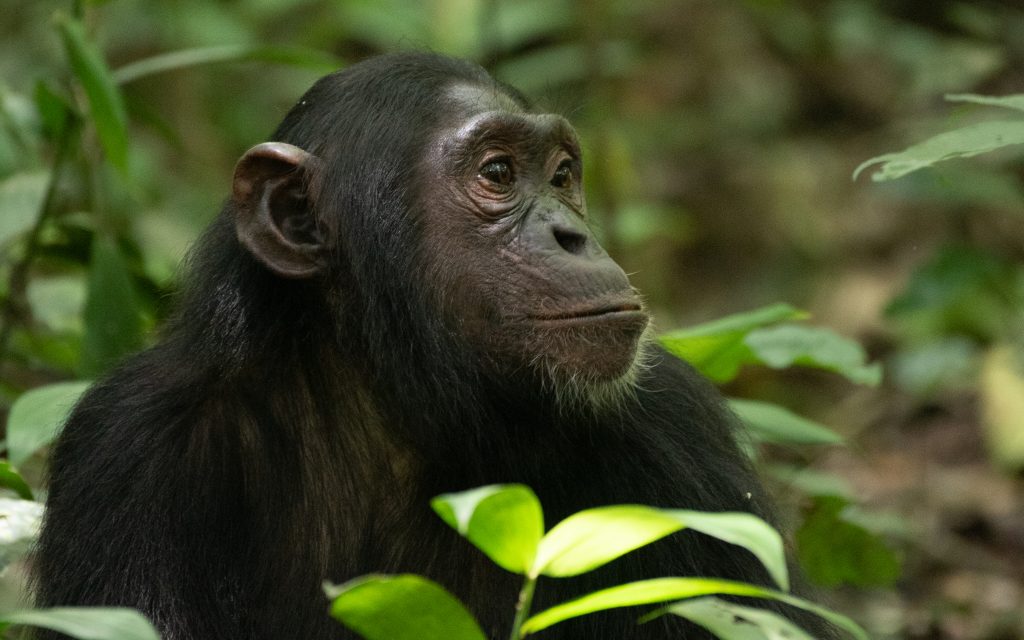
Chimpanzees share 98.7% of their genetic material with humans, making them our closest living relatives. These highly social animals live in communities of several dozen members, led by an alpha male and his allies. Both male and female chimpanzees have distinct personalities, with females often being more trusting and timid. Grooming is a crucial social activity, strengthening bonds within the group.
According to National Geographic, chimpanzees have the broadest range of any great ape. While they predominantly reside in tropical rainforests, they also inhabit woodlands and grasslands across central to western Africa. At night, they typically sleep in trees, favoring the sturdy Ugandan ironwood for its stability, and construct nests from leaves.
Chimpanzees do most of their eating in trees. Their diet primarily consists of fruits and plants, but they also consume insects, eggs, nuts, and a variety of other foods. They enjoy meat and have been observed hunting and eating monkeys, small antelope, and even tortoises, which they crack open by slamming against trees.
Uganda is home to over 5,000 chimpanzees, found in various regions across the country. Key locations for chimpanzee tracking include Kibale National Park, known as the “primate capital of the world” with its 13 primate species and over 1,500 chimpanzees; Maramagambo Forest within Queen Elizabeth National Park; and Ngamba Island Sanctuary, which hosts around 69 chimpanzees, 40 of which are habituated and available for viewing. Kyambura Gorge is another significant habitat, hosting a family of chimpanzees that visitors can observe. Ngamba Island, a 95-hectare sanctuary, provides a protected environment for these fascinating creatures.
In Kibale, you have the opportunity to track a large community of nearly 100 habituated chimpanzees. After your trek through Kibale Forest, you can enjoy a nature walk through the Bigodi wetlands on the park’s edge, where you’ll encounter various primate species, including several types of monkeys and birds.
For those interested in an in-depth primate experience, the Chimpanzee Habituation Experience is available. Starting at 6:30 am, before the chimpanzees leave their nests, this experience allows you to follow chimps alongside researchers. You’ll see the chimpanzees waking up, gathering in large groups, and beginning their day of feeding. You may witness rare behaviors, such as hunting other animals for food, and learn about the various techniques used in the chimp habituation process.
